Surprise Trip
A little mystery. A lot more freedom.
Surprise Trip rethinks travel planning as a guided discovery. It handles the practical details while leaving room for anticipation, personal choice, and change along the way.
01 / OVERVIEW
The joy of going. Without the weight of planning.
Travelers want to explore, but a fragmented planning process can make every choice feel like work. Surprise Trip proposes a calmer path from inspiration to departure: one place to express preferences, discover a trip, and adapt it as life happens.
Highlight
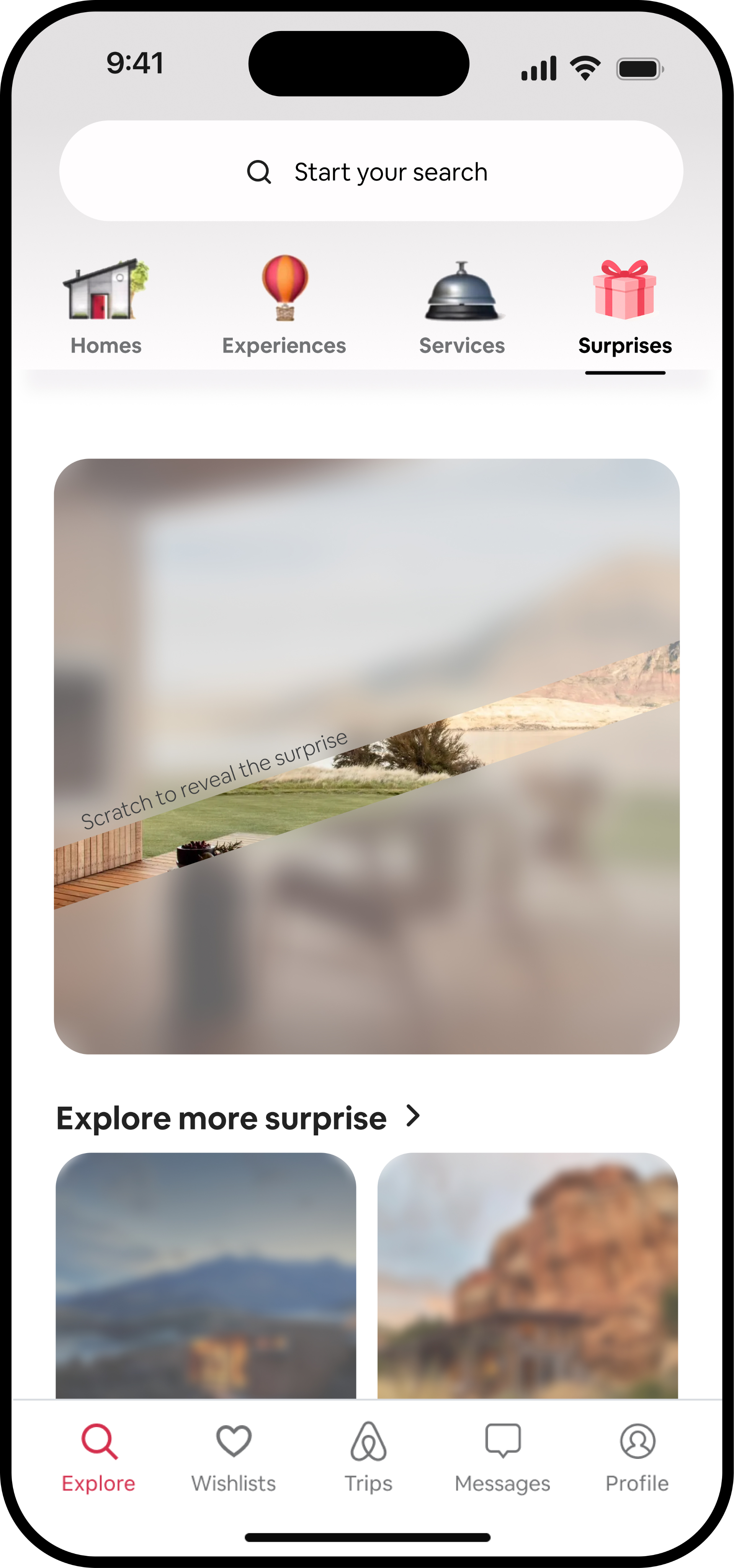
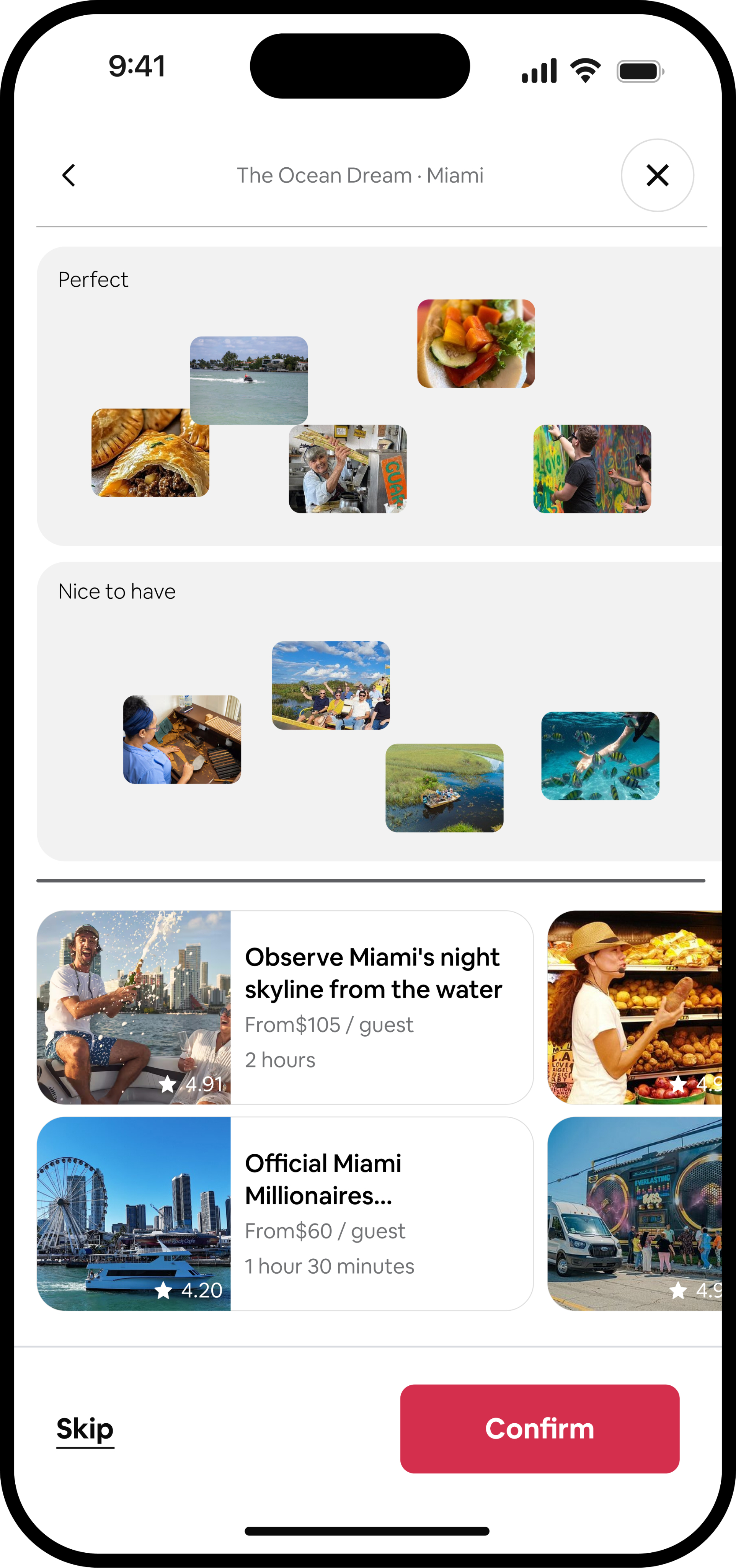
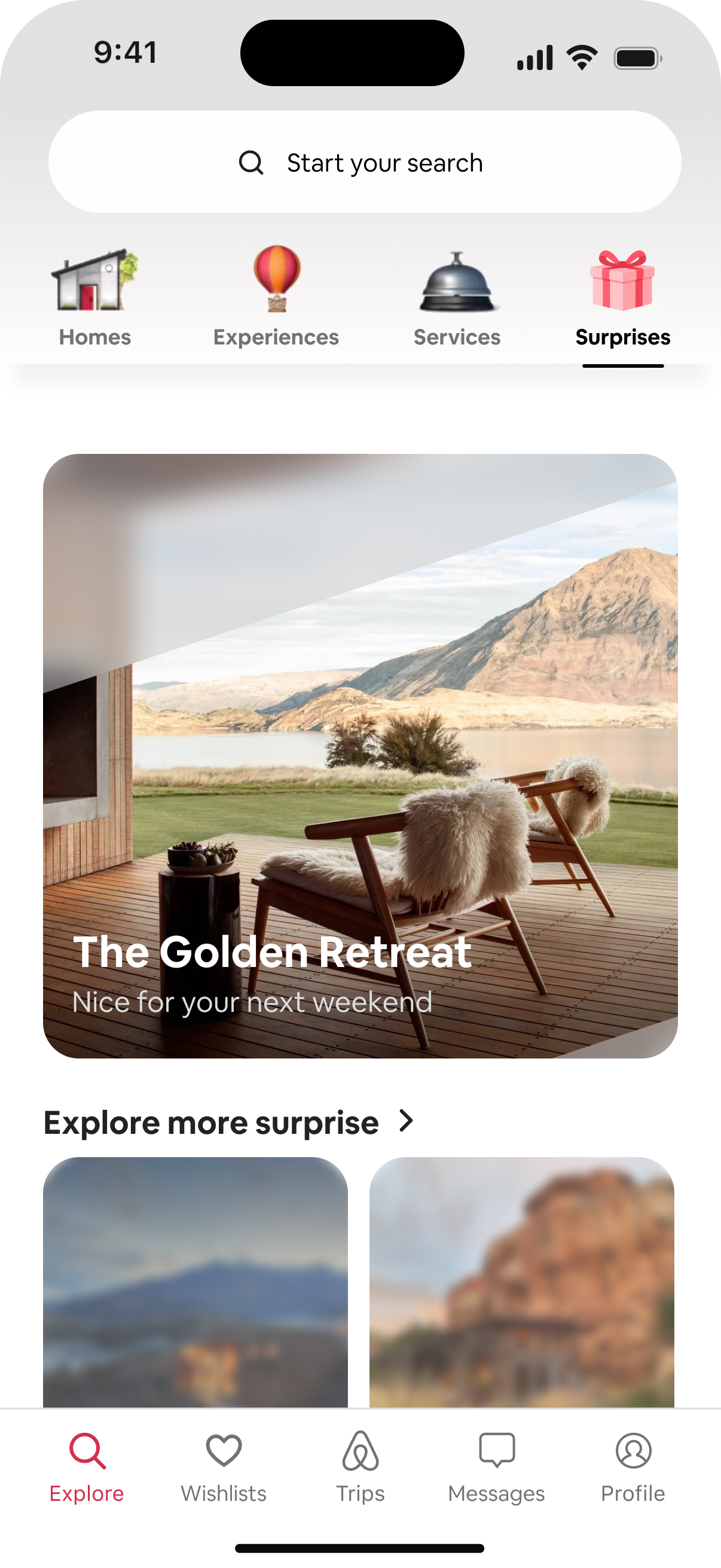
Scratch & Surprise
By simulating a scratch-off lottery ticket to reveal the surprise trip, the experience feels full of surprises from start to finish.
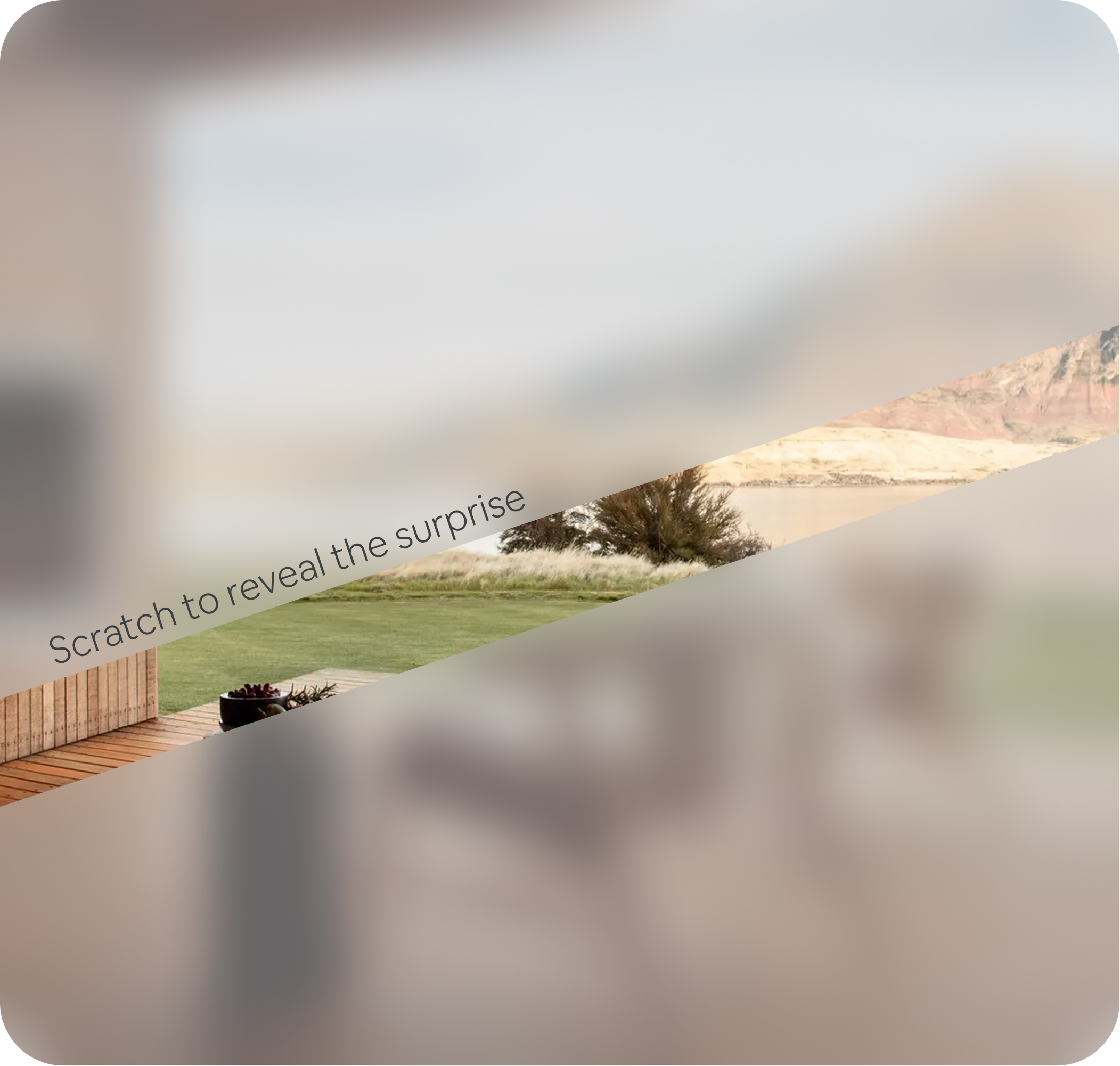
- Progressive revelation of information
- Emotion-driven interaction design

- End-to-end surprise continuity
- Playful yet purposeful metaphor
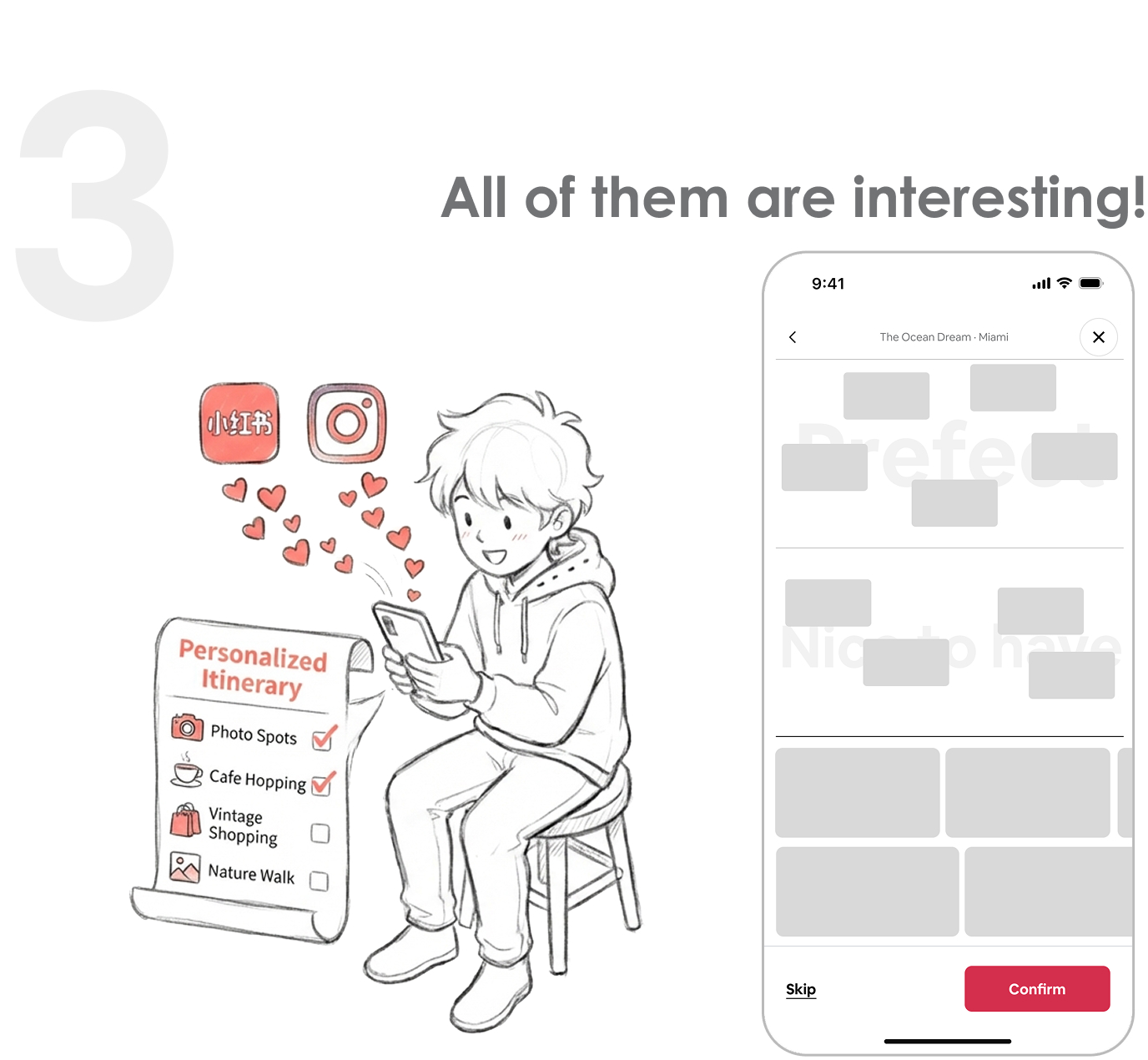
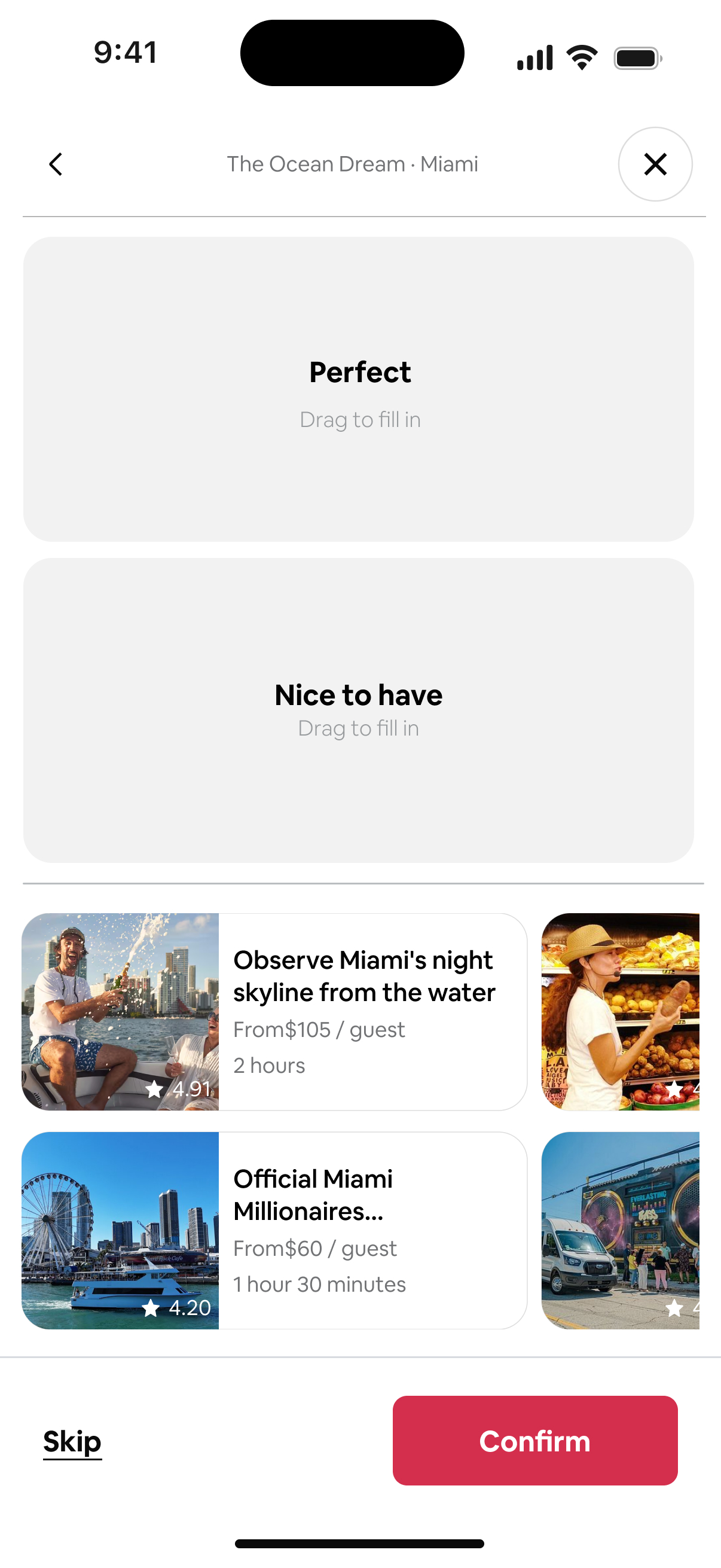
Drag-to-Curate Interests
Users sort activities into “Perfect” and “Nice to have” through drag-and-drop, making preference selection effortless and intuitive.
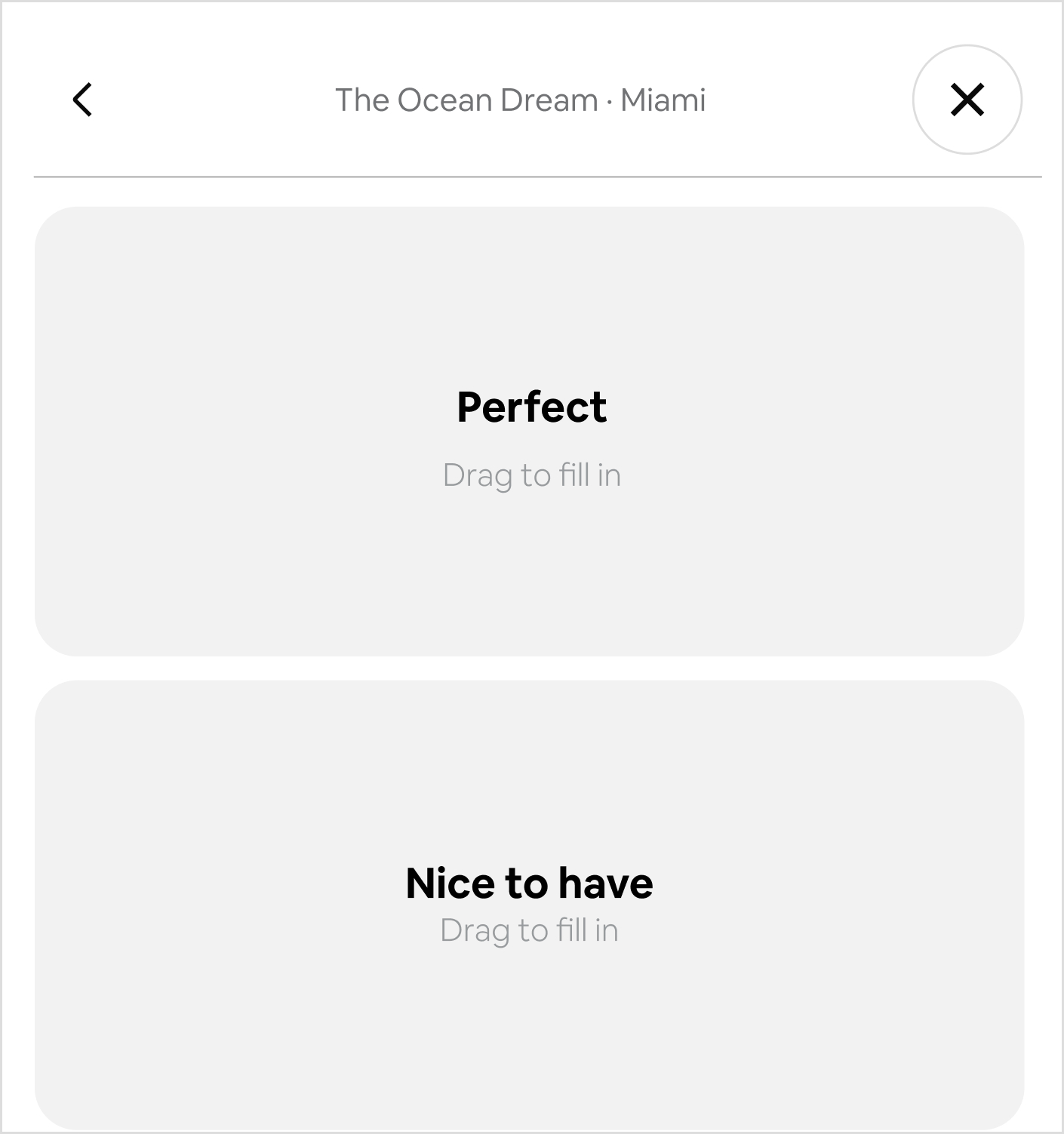
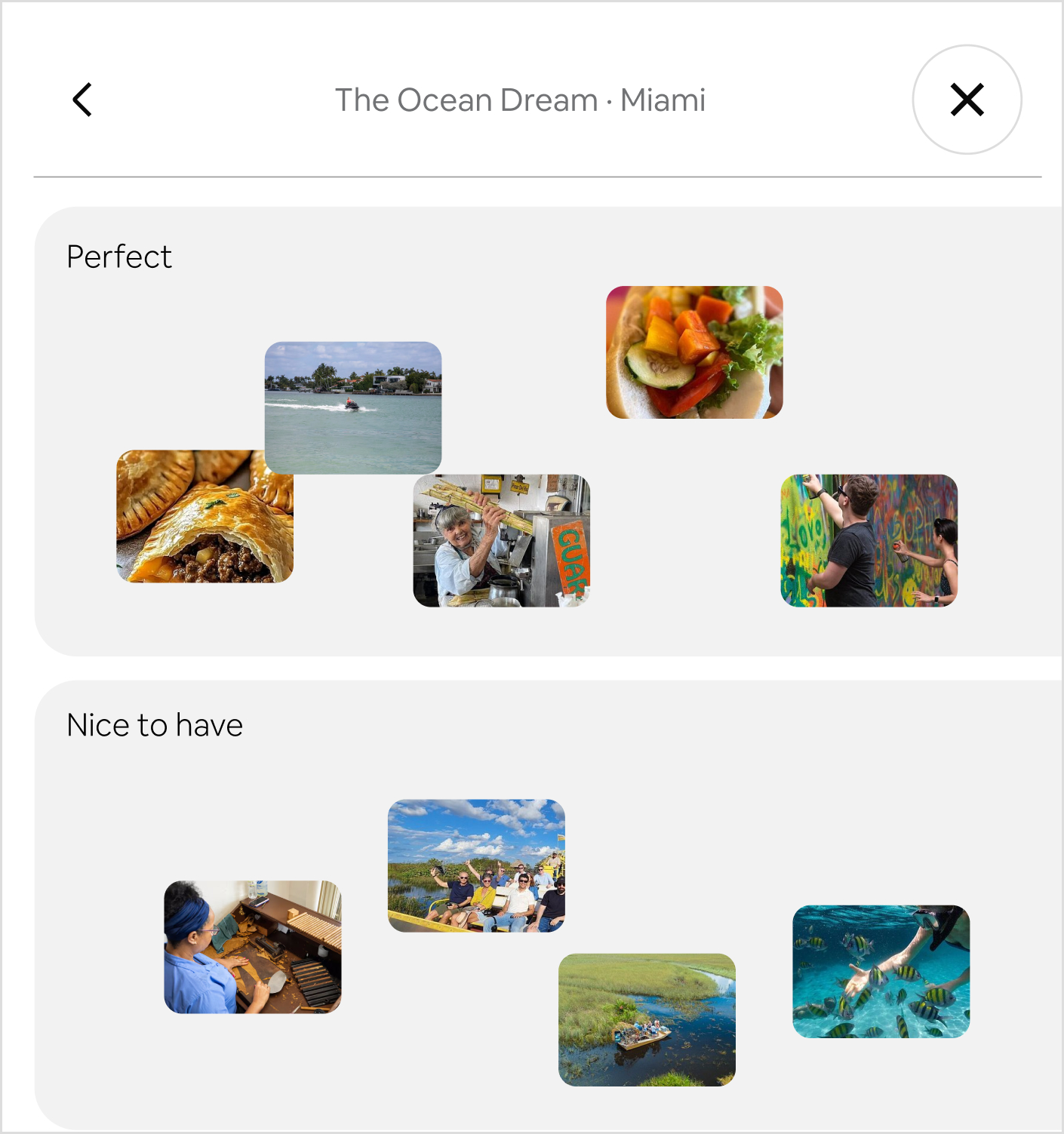
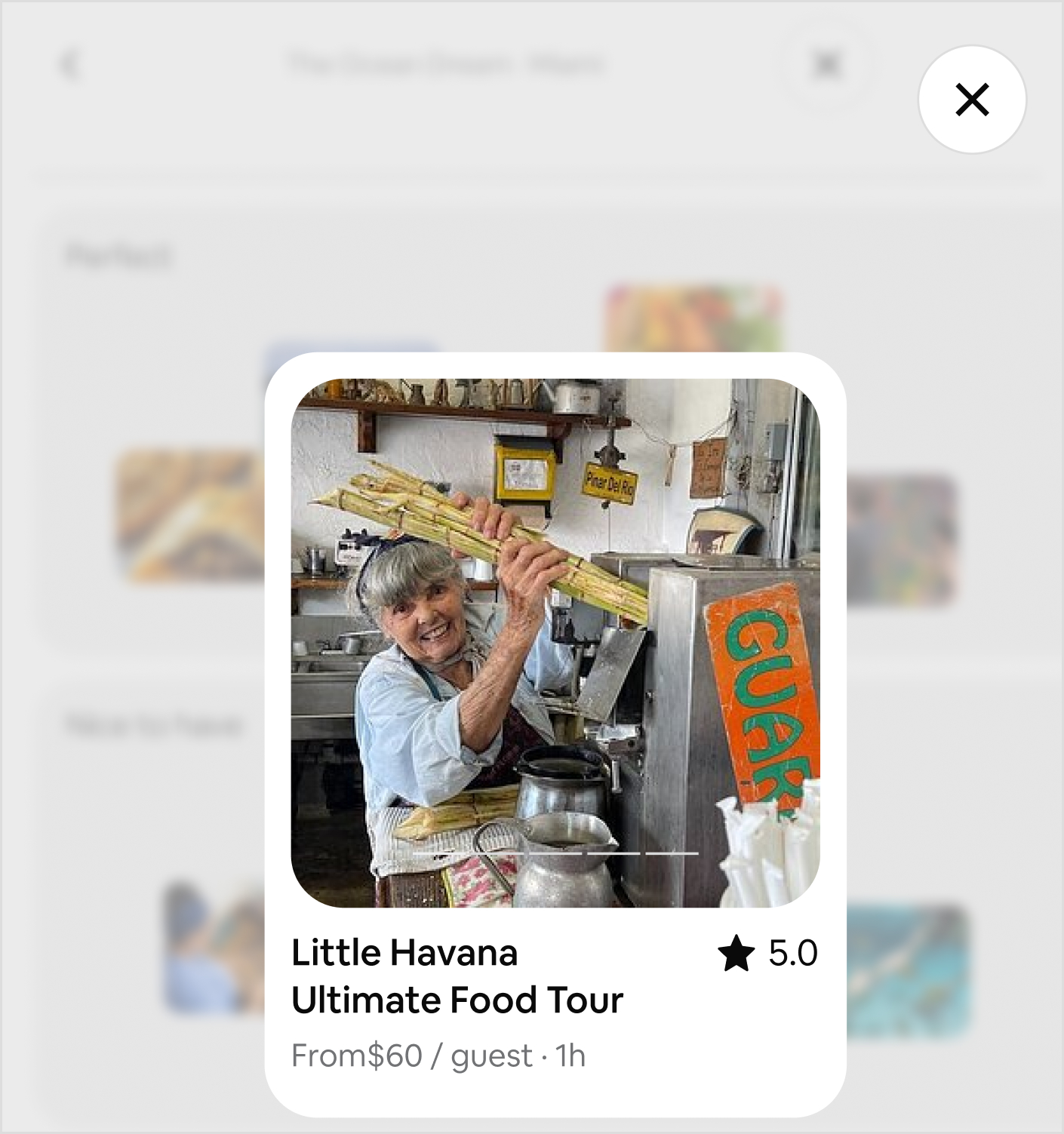
- Enhanced intuitiveness through direct manipulation
- Mindboard-inspired spatial organization
- High information density with immediate overview
- Embodied preference expression
02 / RESEARCH
Travel planning loses its delight in the details.
User Says,
out of 20 interviews

90% of users reported location and connectivity anxiety
It is difficult to quickly assess the real accessibility between their accommodation and the next day’s itinerary/restaurants/transportation (straight-line distance ≠ actual travel time), which makes it hard to choose suitable lodging.

85% of users believe local guides and activities should be integrated into the accommodation page
Nearby restaurants, experiences, ticketing, and reservation reminders are consolidated directly into the listing, minimizing the need to switch to external apps.

70% of users want more efficient save and comparison features
They expect to one-click select and compare multiple accommodations from their favorites, with clear visibility into distance and real accessibility (e.g., proximity and ease of travel), to make faster and more confident lodging decisions.

55% of users believe ticketing and reservations have “hidden pitfalls”
Some attractions require advance reservations or have peak-time rules, but the information is fragmented and often only discovered at the last minute—resulting in missed opportunities. Researching and planning this information in advance is difficult and cumbersome .
03 / PERSONA & USER JOURNEY
From excitement to information overload.
Persona

Background
A college student who travels frequently. Often acts as the trip organizer among friends. Prefers independent travel during holidays and enjoys immersive, local experiences.
Goals
- Minimize app switching and quickly identify reliable accommodations with good food and activities nearby
- Clearly understand the total price and cancellation/change costs before booking
- Highly price-sensitive
- Relies heavily on public transportation
Behaviors
- Saves multiple options and compares them before deciding
- Searches for food and activities on external apps (e.g., Xiaohongshu, Dianping, Douyin), then returns to complete the booking

Background
A parent traveling with children, seeking to explore natural landscapes and scenic destinations. Values comfort and reliability when traveling as a family.
Goals
- Quickly finalize itineraries and accommodations
- Less price-sensitive compared to other users
- High expectations for facilities and amenities
- Strong preference for well-located accommodations that minimize travel effort
Behaviors
- Prefers a one-stop app to handle most travel-related needs
- Will compare prices, but convenience takes priority over finding the lowest cost
User Journey Map
Scroll to explore the full journey
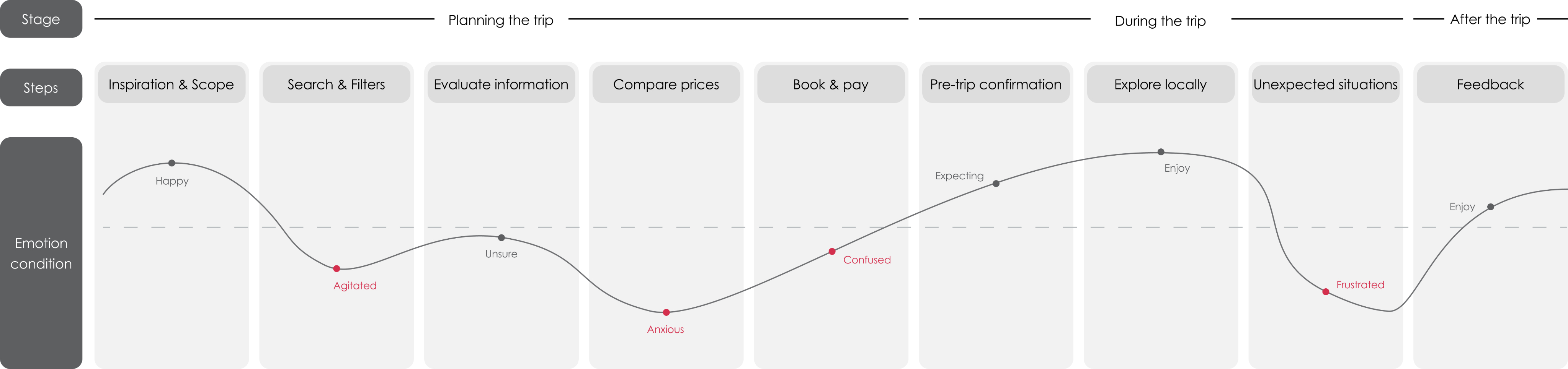
Insights & Opportunities
Users struggle to judge real-world accessibility, not distance.
Most users experience location and connectivity anxiety when choosing accommodation. They find it difficult to quickly understand the real accessibility between where they stay and next-day plans (restaurants, activities, transportation), since straight-line distance rarely reflects actual travel effort.

Reduce decision fatigue by helping users gain confidence faster when choosing between multiple viable options.
Too much information search undermines the sense of delight.
While users enjoy discovering new places, the effort required to research logistics, rules, and feasibility often outweighs the excitement. Surprise loses its charm when users must manually verify everything to feel safe.
Protect the sense of delight in travel by minimizing the effort required to verify feasibility and rules.
Users want transparency, not full control.
Rather than planning every detail themselves, users prefer clear constraints, smart defaults, and timely reminders (e.g. reservation deadlines, peak restrictions). This builds trust without taking away the joy of discovery.
Build trust through clarity and guardrails rather than full control or over-configuration.
Comparing accommodations is mentally costly and inefficient.
Users want to shortlist and one-click compare multiple saved stays, especially in terms of proximity and accessibility. Without clear side-by-side comparison, users spend excessive effort switching views and still feel unsure about their decision.

Reduce decision fatigue by helping users gain confidence faster when choosing between multiple viable options.
Ticketing and reservation rules are perceived as hidden traps.
Many attractions require advance reservations or follow peak-time rules, but this information is fragmented and often discovered too late. Users frequently miss experiences simply because they didn’t know the rules in advance, making travel planning feel risky and stressful.
Prevent negative surprises by surfacing critical constraints before they become trip-breaking issues.
04 / DESIGN APPROACH
Design for confidence, curiosity, and recovery.
HMW:
Help travelers plan and enjoy their journeys seamlessly and effortlessly, without letting the planning process diminish the joy of travel.
Core challenges:
- Simplify decision-making
- Distinctive experiences
- Integrate accommodation and activity information
Targeting to:
- Effortless planning
- Clear and well-structured arrangements
- Maintained excitement and anticipation for the trip
Ideation
Surprise Travel
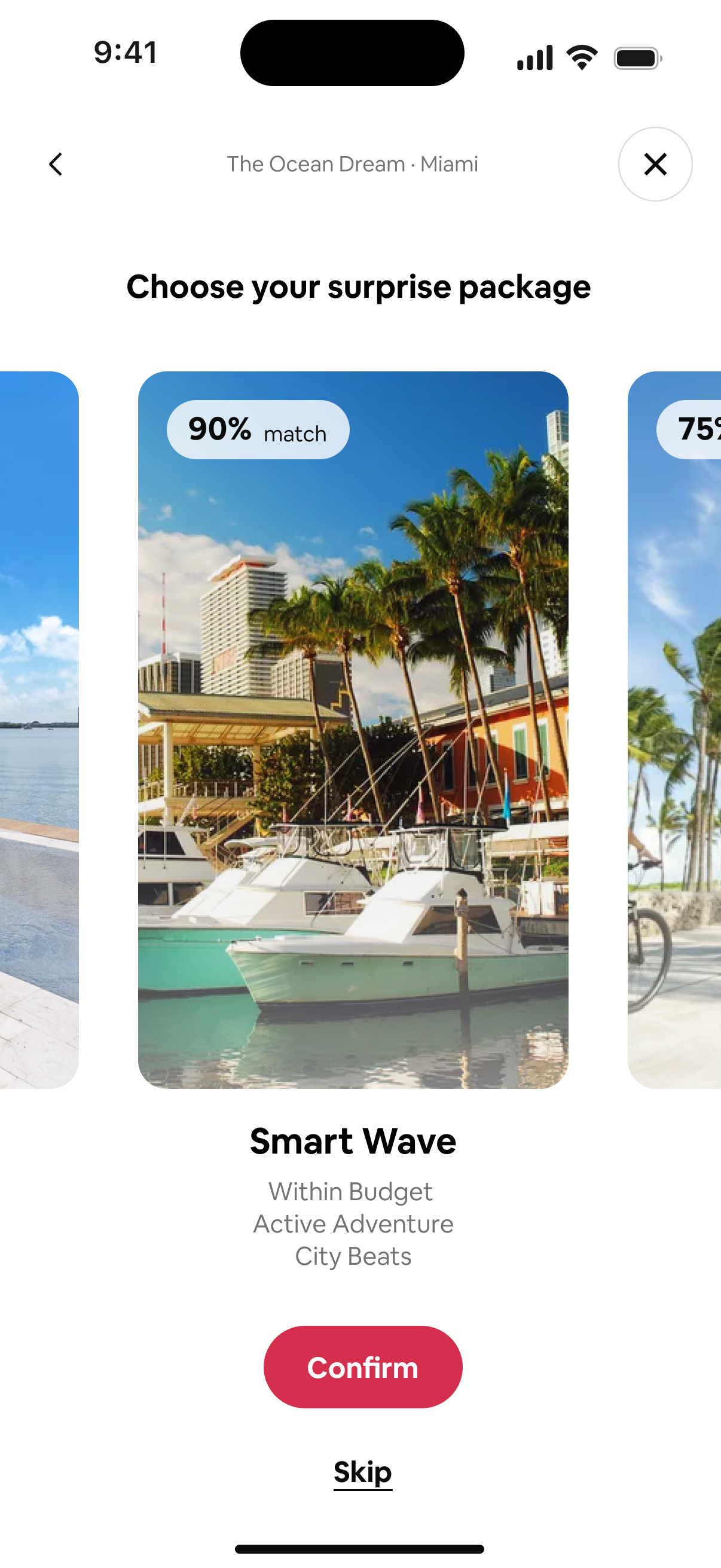
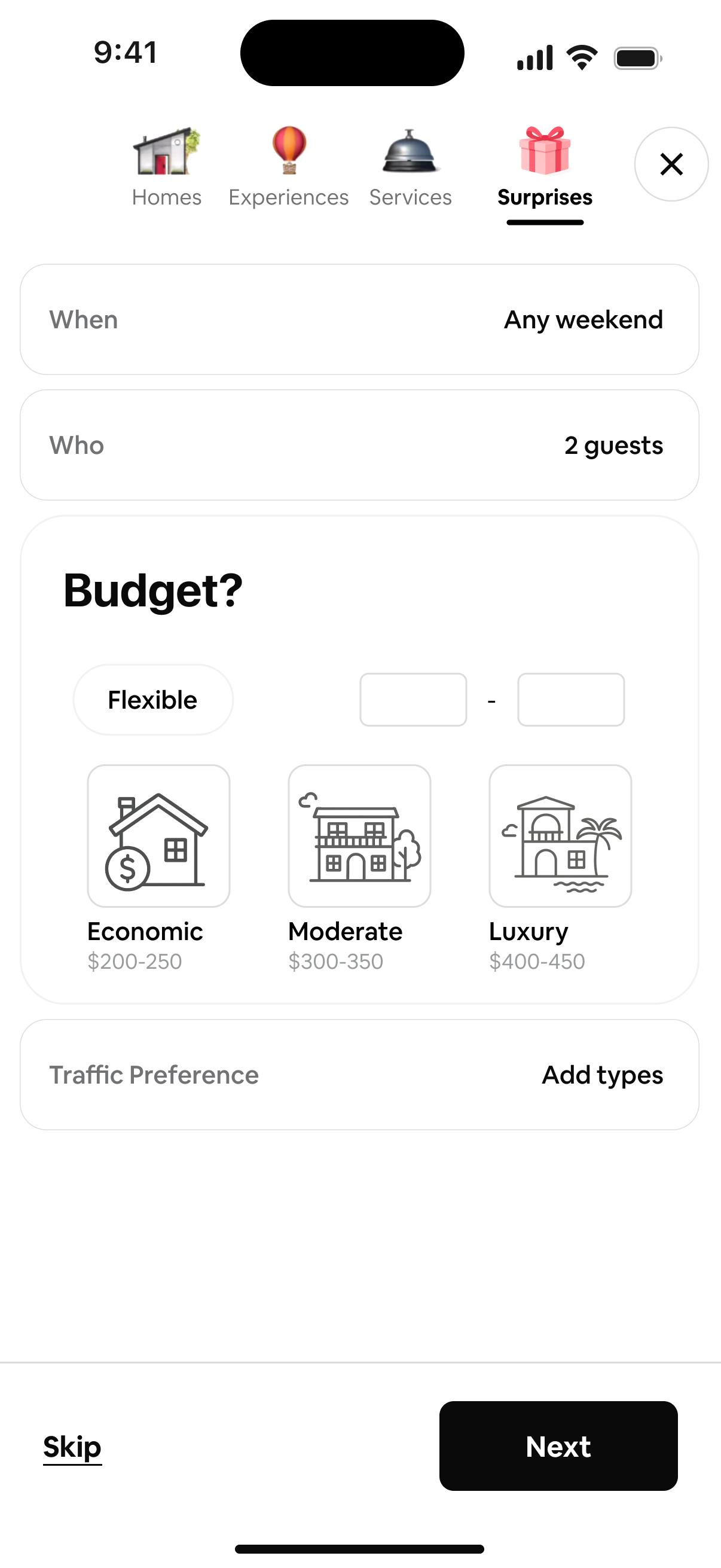
Users who choose surprise travel don’t need to worry about their itinerary, because the system customizes the entire trip—including the destination—based on their preferences (such as trip length, budget, and more).
One-Price Package
Like Disney, everything is offered at a single, unified price—once you arrive in the city, you can freely enjoy most of the attractions.
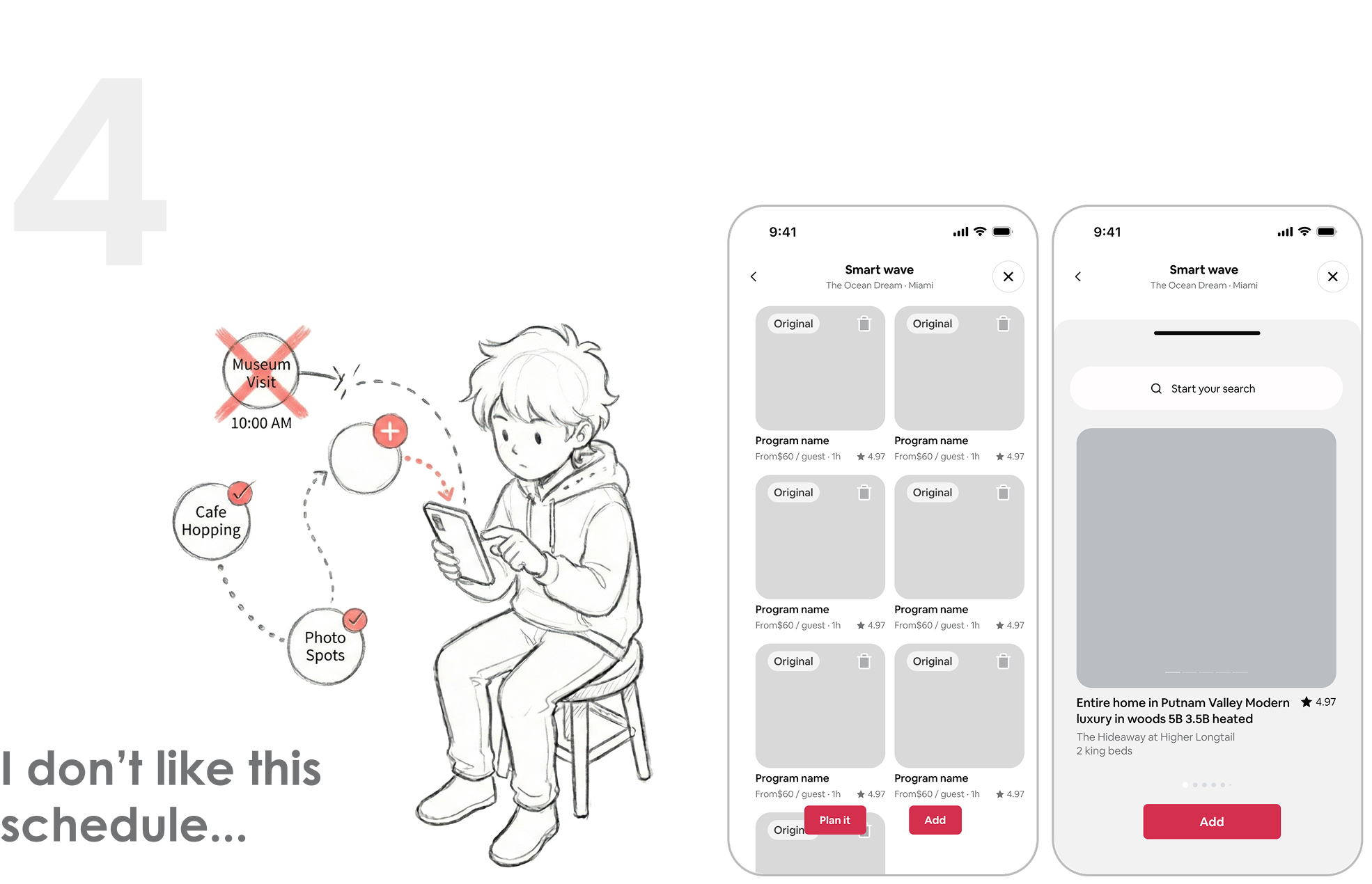
AI travel planning agent
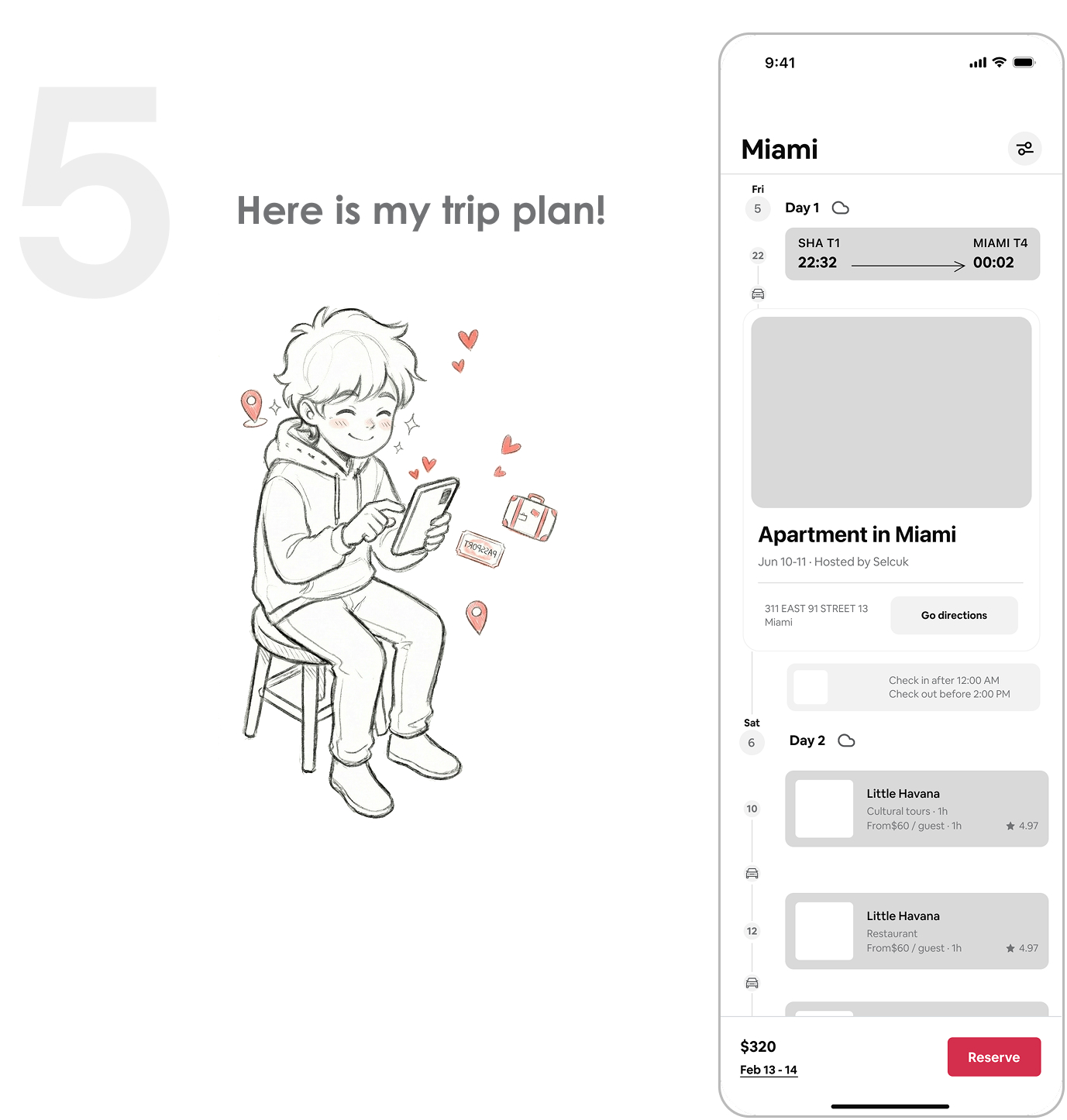
Users rank preferred attractions, and data-driven routing estimates visit times, optimizes itineraries, and recommends accommodations, with customizable options for budget, trip length, transport, and split billing.
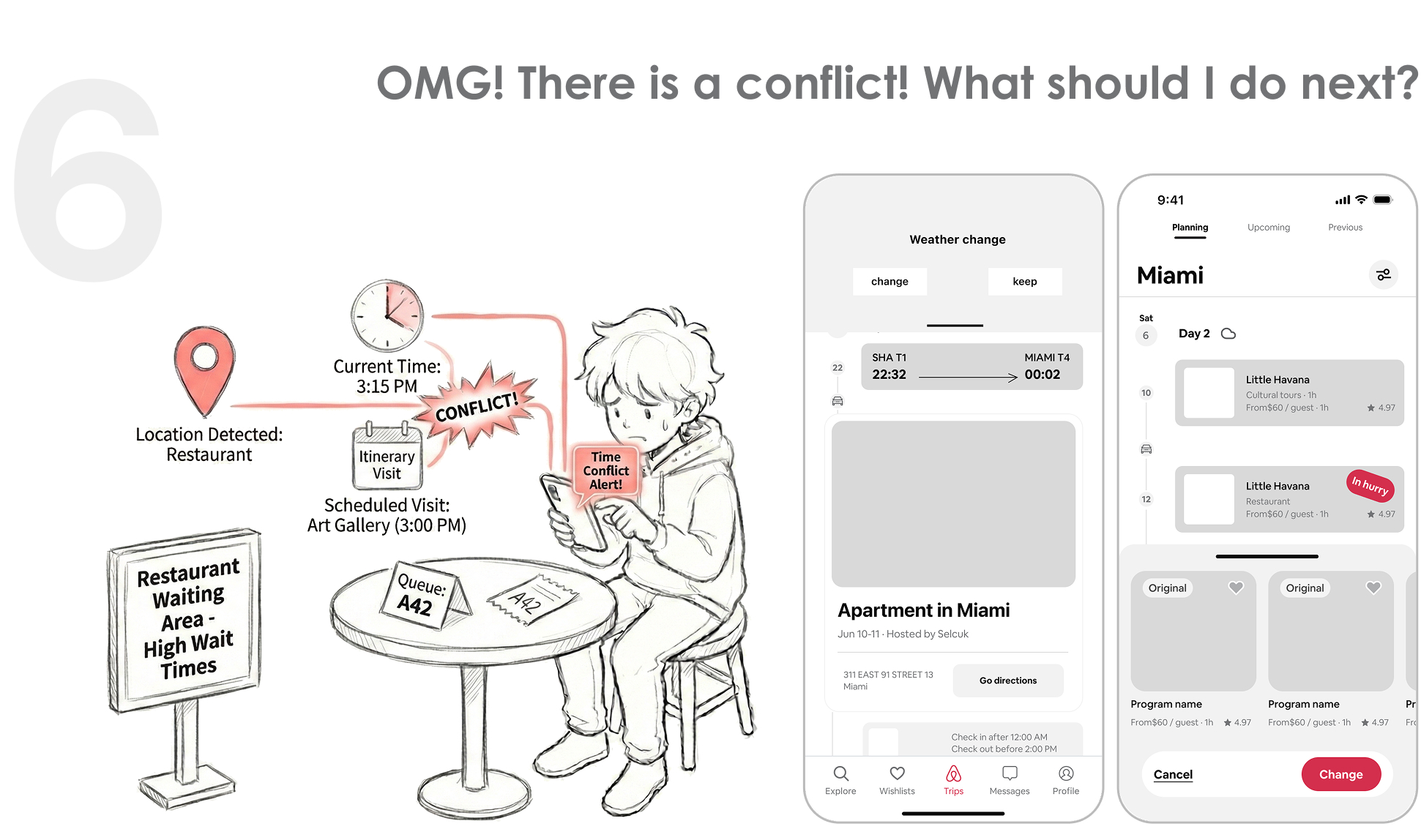
Real-time itinerary updates based on user location: the system detects timing and distance conflicts and proactively suggests adjustments (e.g., queue earlier or reschedule the next activity).
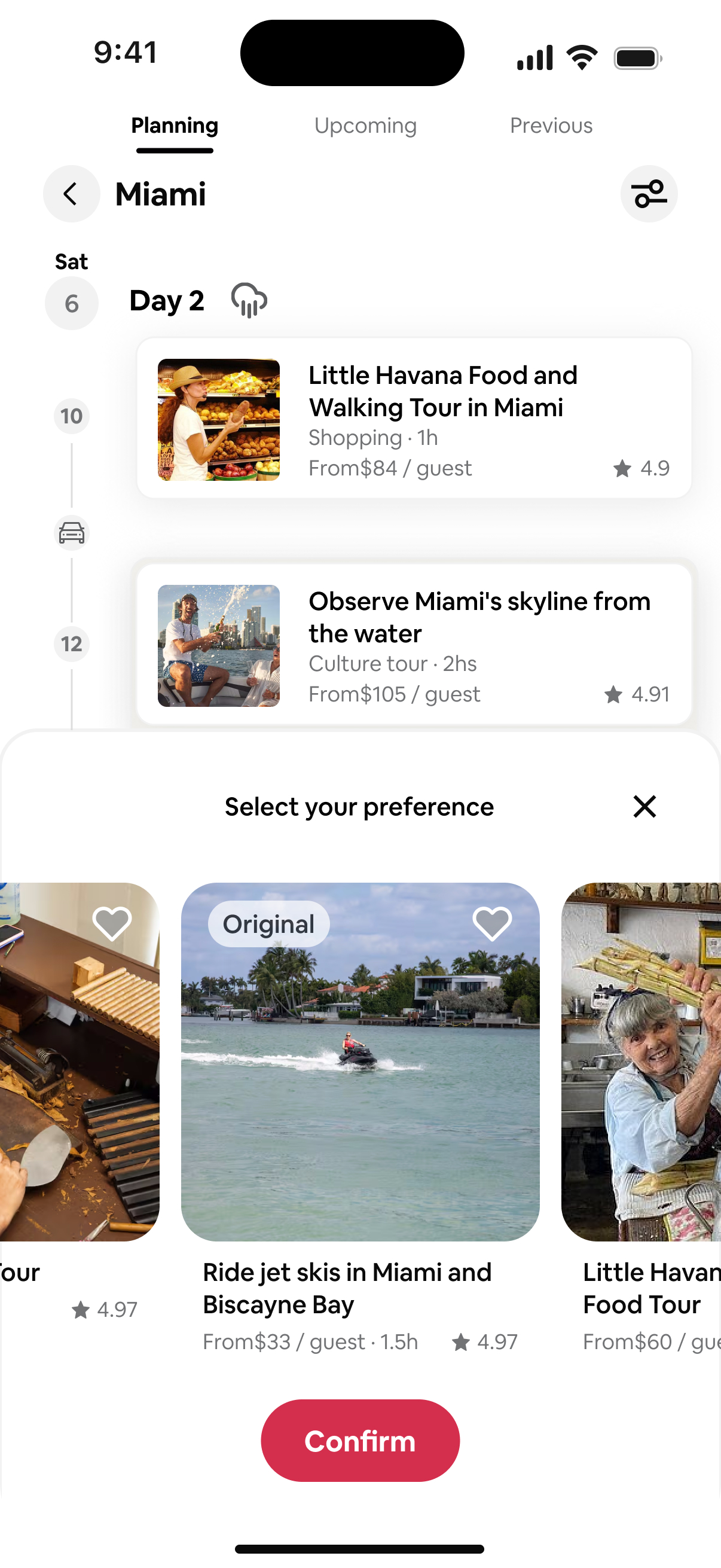
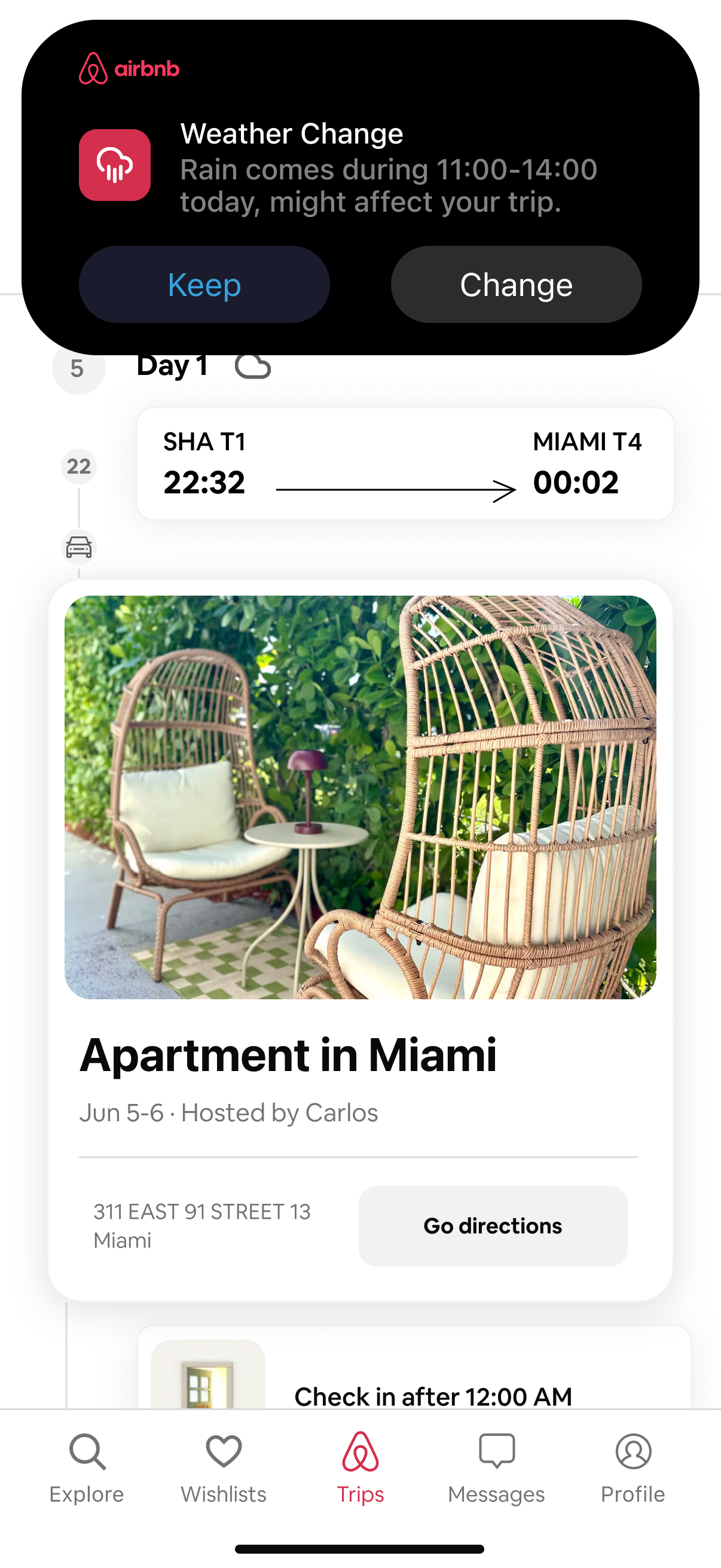
Weather-aware optimization: automatically adjusts plans based on weather, suggesting indoor alternatives and syncing availability or reservations.
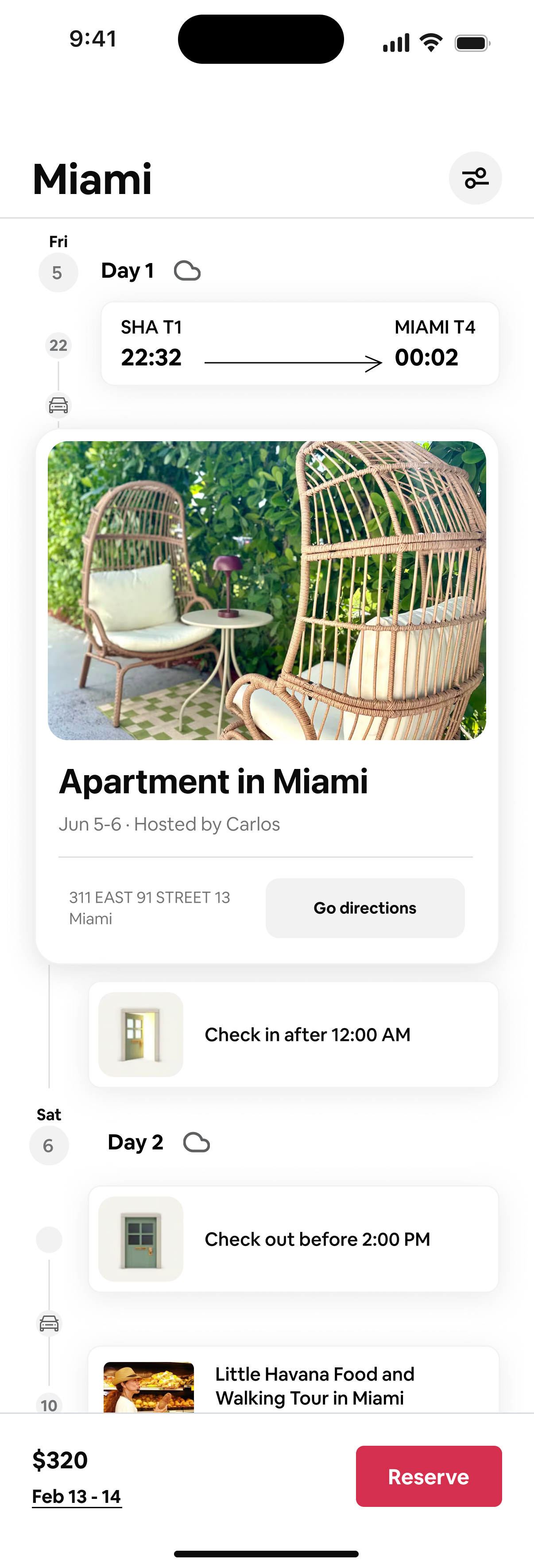
Cross-platform sync: pulls bookings from multiple apps and merges them into one itinerary.
Smart accessibility analysis: uses real travel time to optimize routes and off-peak schedules.
Multi-user itinerary collaboration
Invite travel companions to join and vote on a shared itinerary. Collaborate on expenses and split costs within the app, with WeChat Pay and Alipay support.
Interactive itinerary notes: pin key concerns for each attraction to align everyone’s needs. Personal preferences: mark dietary restrictions to avoid awkward moments.
Design Feature
Trip motivated & Frustration

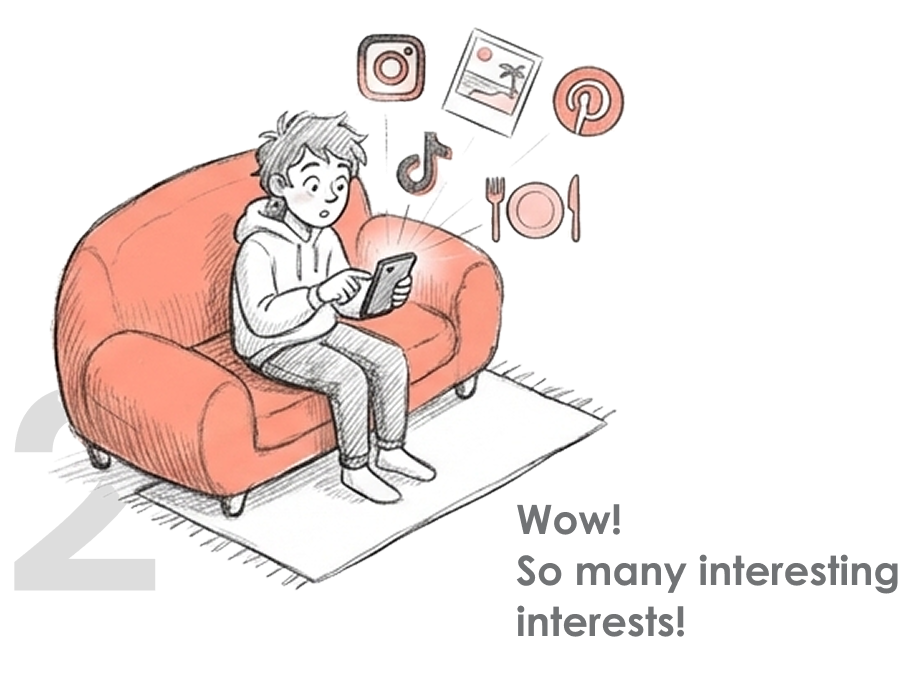
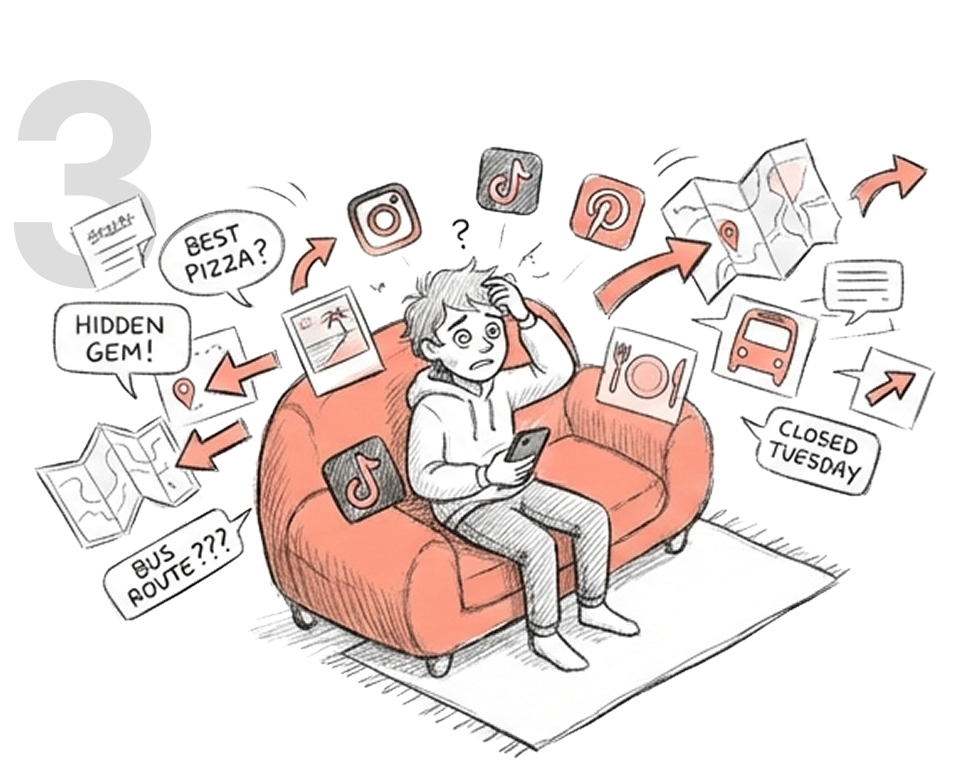
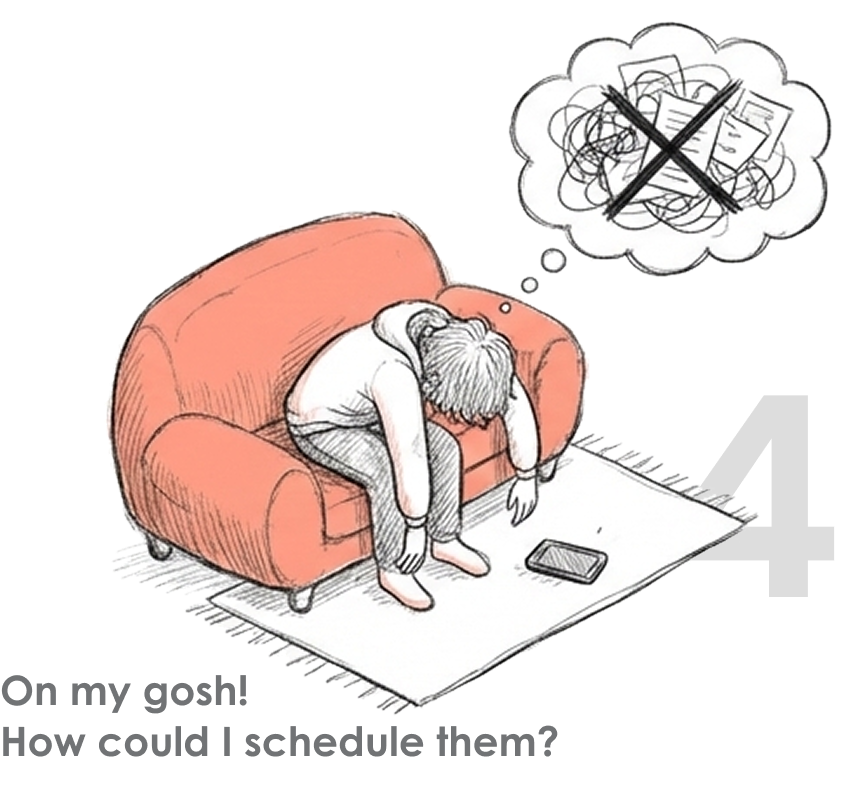
Planning your trip
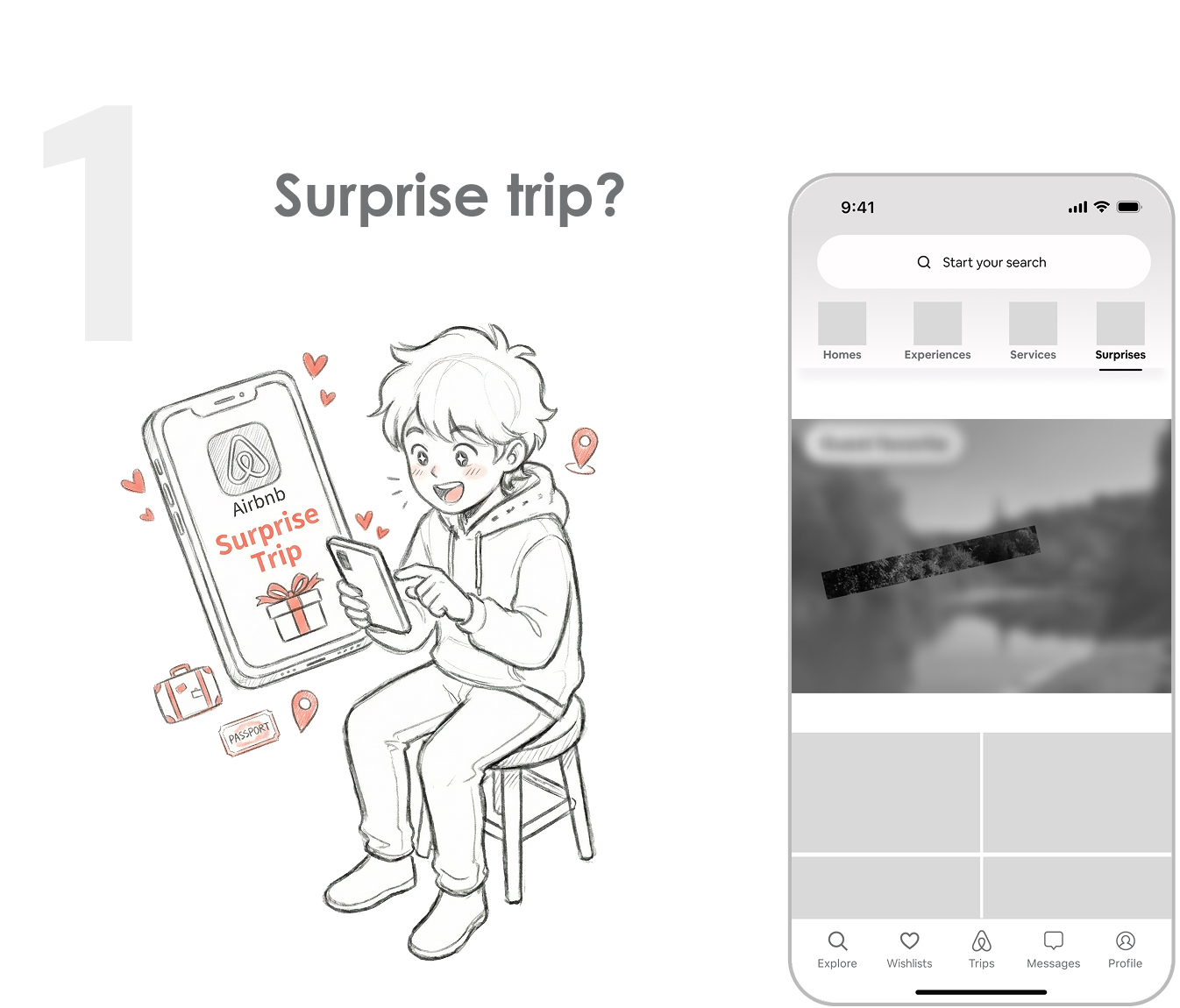
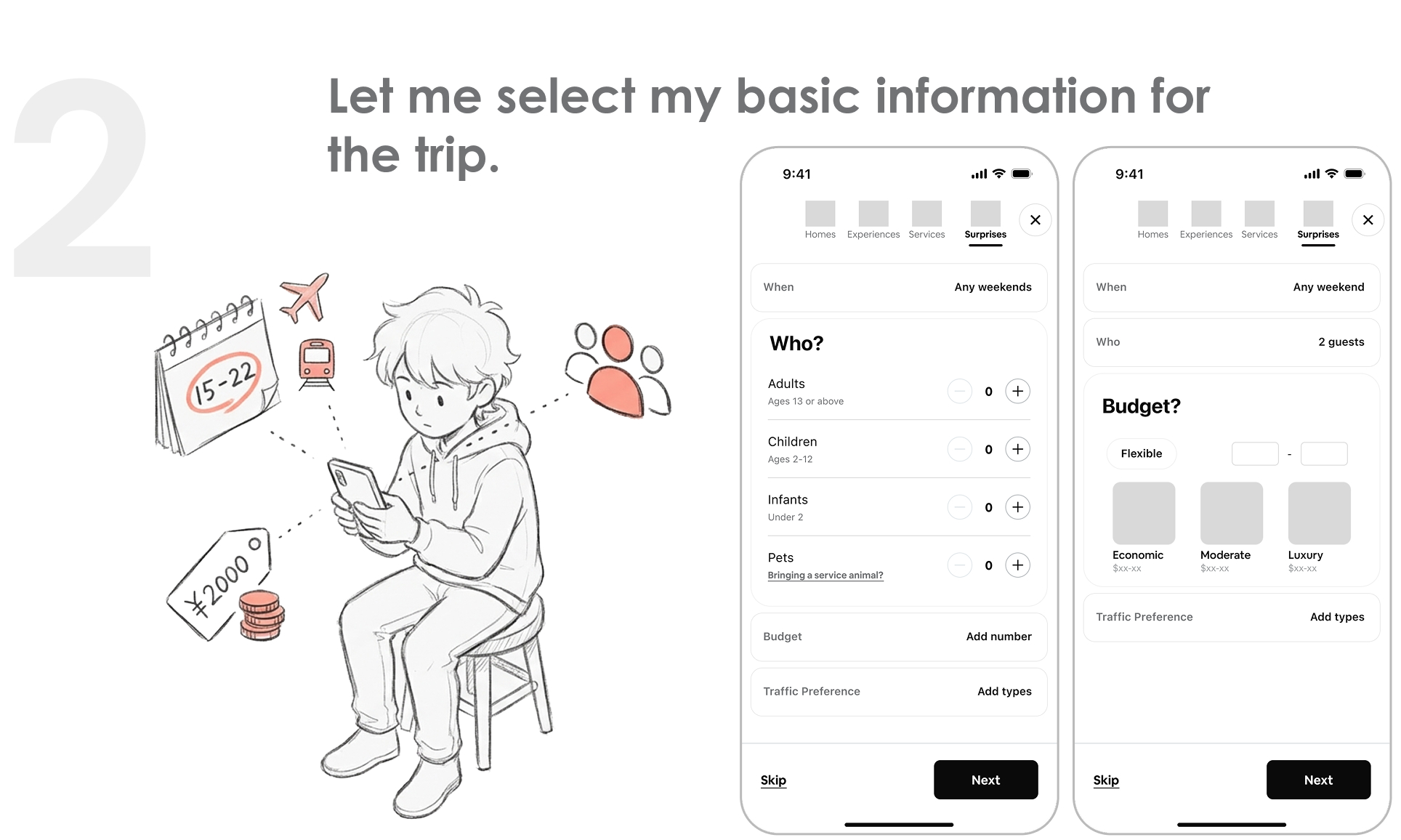
Problems during the trip
05 / EXPERIENCE
Make the unknown feel inviting.
01Design your trip
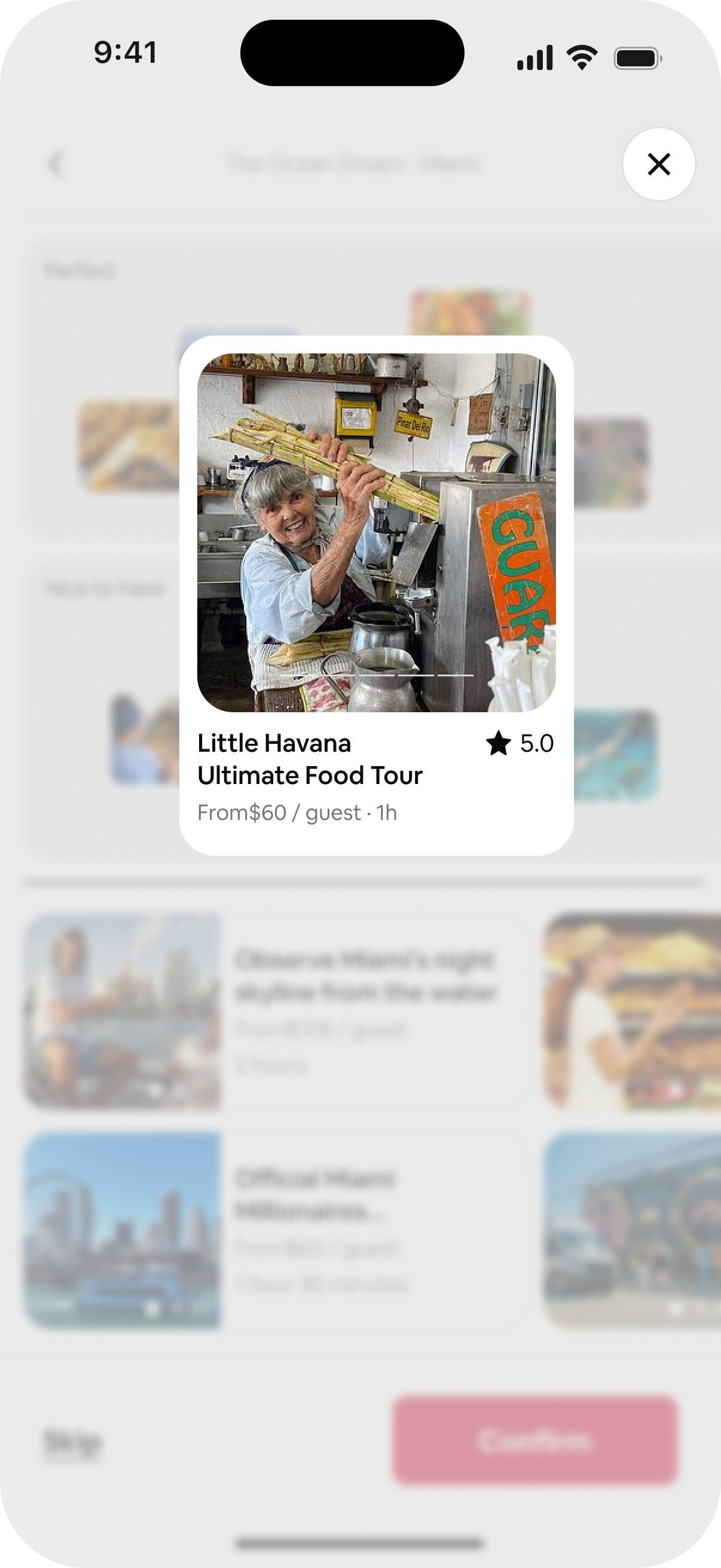
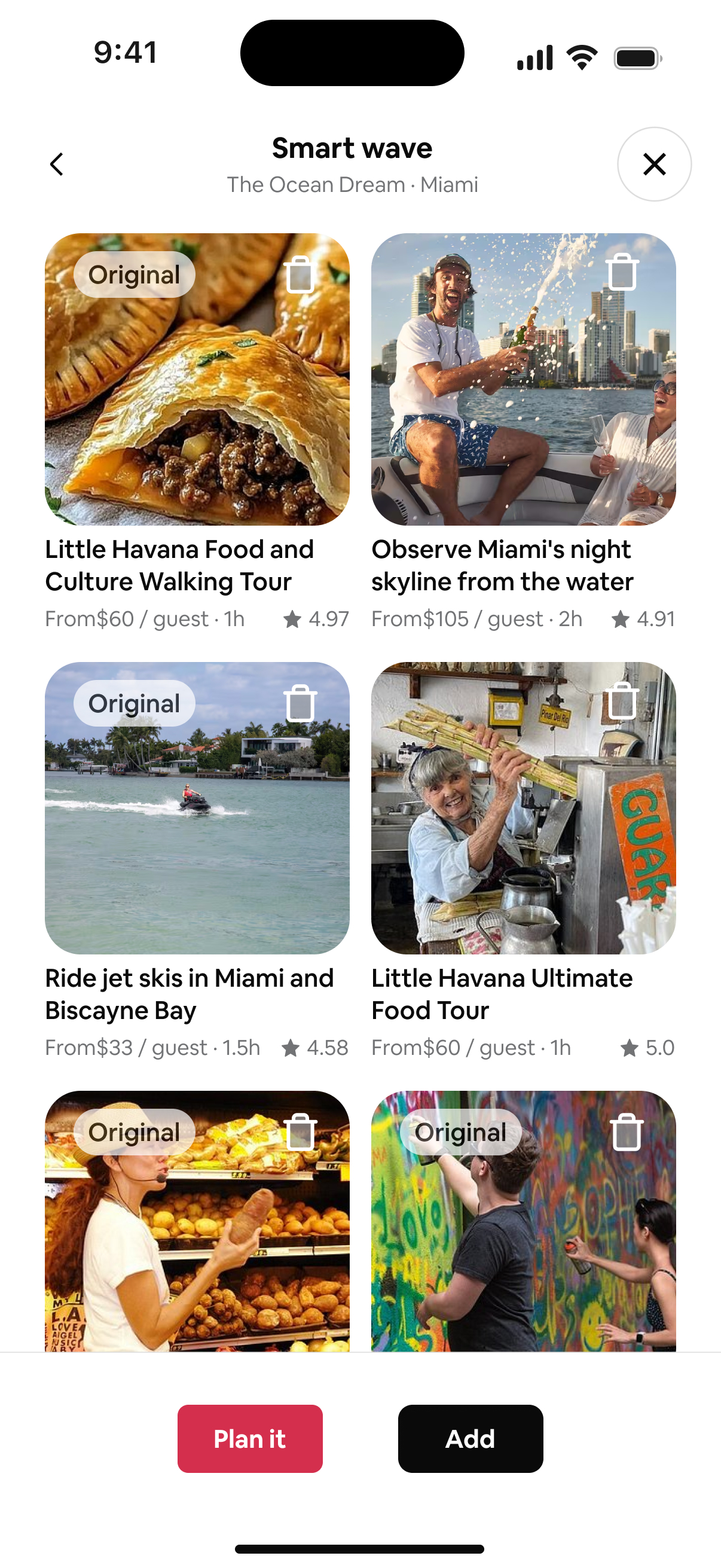
02Change your trip
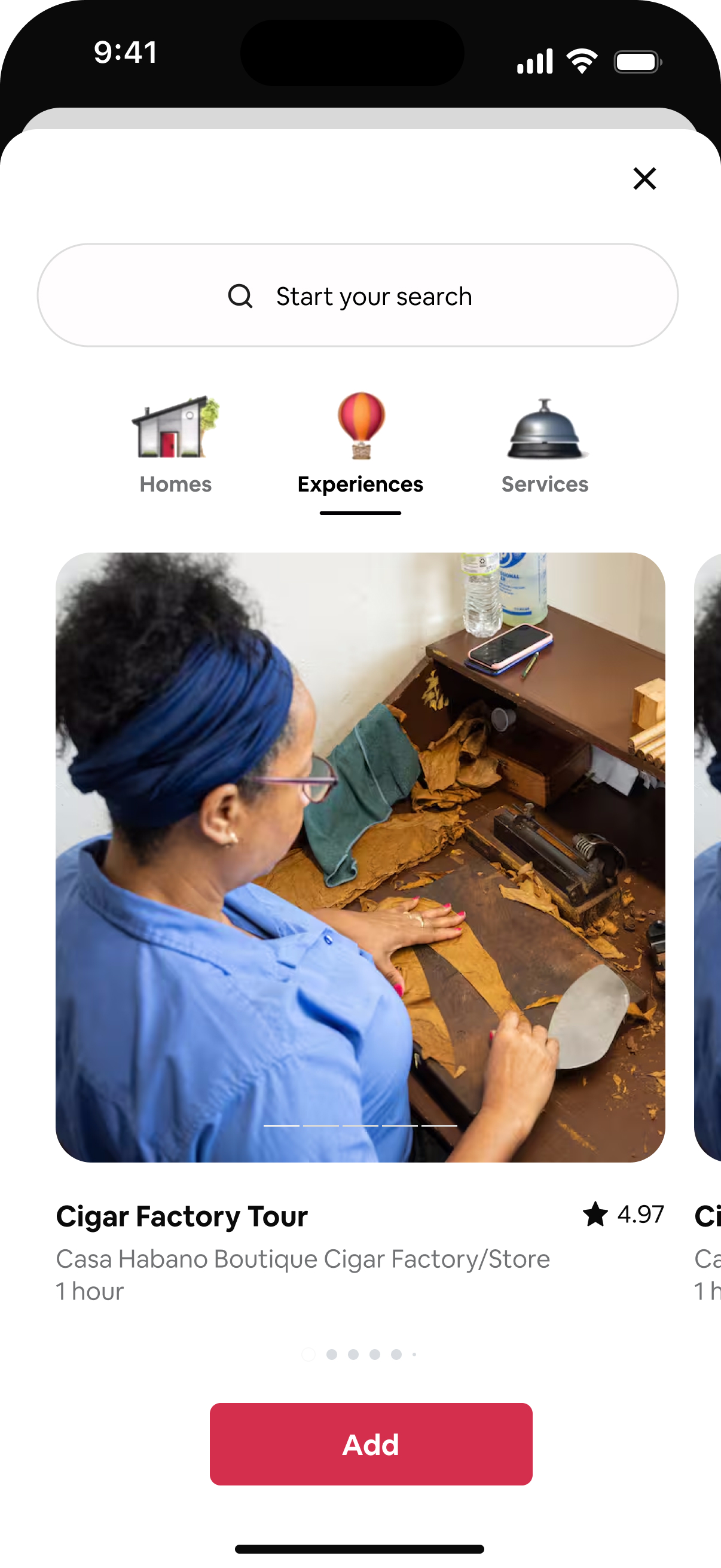
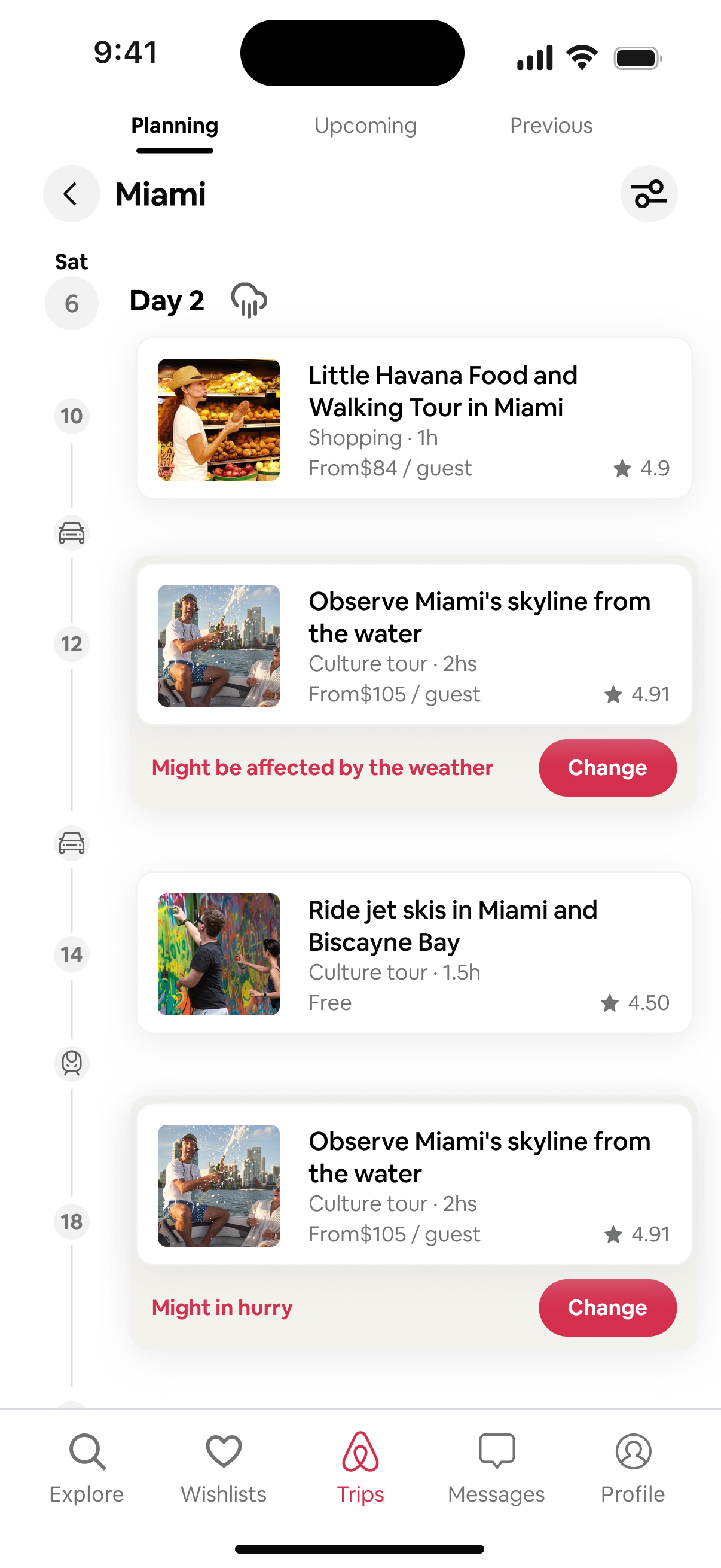
03Check your trip
06 / REFLECTION
Leave room for the unexpected.
Surprise Trip balances autonomy with reassurance: the system takes care of logistics, while travelers keep the feeling that the journey is theirs to discover.